
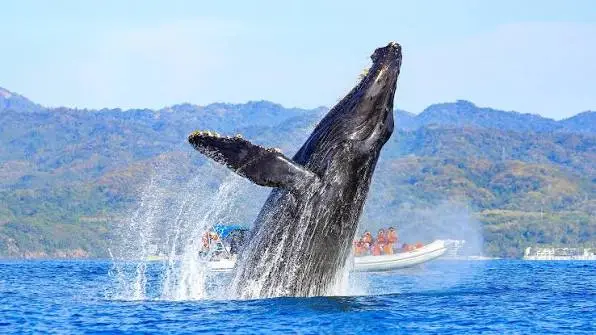
Every year, the deep blue waters of Banderas Bay become the stage for one of the most awe-inspiring natural phenomena on Earth: the arrival of humpback whales (Megaptera novaeangliae). Traveling from the frigid feeding grounds of the North Pacific, these marine giants undertake an epic journey covering thousands of miles to find the ultimate sanctuary along the coastlines of Jalisco and Nayarit—a place to court, mate, give birth, and teach their newborns their very first strokes.
For travelers visiting Puerto Vallarta during the winter and early spring months, witnessing these gentle leviathans up close is a transformative experience that connects you deeply to the raw majesty of the ocean.
The Migration: A Journey of Over 5,000 Miles
Humpback whales spend the warm months of the northern hemisphere feeding in the nutrient-dense waters of Alaska, Canada, and Northern California. As winter approaches, they embark on one of the longest documented mammal migrations on the planet.
From mid-December through late March, the first pods begin arriving in the bay. Sheltered by the peaks of the Sierra Madre mountains, Banderas Bay offers calm, warm, and protected waters that serve two vital biological purposes:
-
Courtship and Mating: Active pods of adult males engage in dramatic displays of strength to win the attention of females, performing gravity-defying breaches, powerful fin slaps, and complex underwater melodies.
-
Birthing and Nursing: Expectant mothers seek out the safety of shallow, calm waters—away from open-ocean predators—to give birth to their calves. Because newborns are born with a thin blubber layer, the balmy water temperatures allow them to nurse safely and rapidly gain strength from their mother’s nutrient-rich milk before heading back north.
Captivating Behaviors on the Open Water
Setting out across the bay in search of cetaceans is an exhilarating adventure where no two excursions are ever quite the same. Among the most remarkable behaviors you may witness are:
-
Breaching: Weighing between 30 and 40 tons and measuring up to 50 feet in length, humpback whales can launch up to two-thirds of their massive bodies clear out of the water, creating a thunderous splash that resonates across the sea.
-
Pectoral and Tail Slapping: It is common to see them rolling onto their backs or sides, raising their long pectoral fins—the largest in proportion to body size of any whale species—and rhythmically slapping the water’s surface as a means of communication or play.
-
Spyhopping: A whale will slowly lift its head vertically out of the water up to eye level, curiously surveying the boats and the surrounding coastline before smoothly slipping back beneath the waves.
-
Whale Songs: Many specialized eco-tours carry hydrophones (submersible microphones) on board. Lowering these devices into the water allows guests to listen in real time to the haunting, melodic compositions sung exclusively by males—songs that can travel dozens of miles through the ocean depths.
Responsible Whale Watching: Respecting Marine Life
Whale watching in Mexico is governed by strict federal environmental regulations (overseen by SEMARNAT) to ensure human presence does not interrupt vital biological cycles or cause stress to the animals. When selecting a tour, it is essential to travel with certified operators displaying official authorization flags:
-
Safe Distances: Licensed vessels maintain a respectful, mandatory buffer distance from the whales to avoid crowding or blocking their path.
-
Special Care for Mothers and Calves: When a mother and her newborn calf are spotted, captains drop engines into neutral and limit observation time to safeguard quiet nursing and bonding moments.
-
Expert Guides on Board: Certified expeditions are frequently led by marine biologists and naturalists who enrich the tour with scientific insights into whale anatomy, dorsal fin and fluke photo-identification records, and local conservation initiatives.
The Perfect Starting Point for Your Ocean Adventure
Embarking on a whale-watching excursion is even more rewarding when your hotel sits right along the water’s edge. Setting out in the morning from the heart of the Romantic Zone, boarding a certified catamaran or tour boat, and returning in the afternoon to unwind to the sound of crashing waves allows you to experience nature’s greatest show with effortless comfort and style.
Contact and Reservations — Pier 69 Hotel
-
Address: Calle Rodolfo Gómez 111, Zona Romántica, Emiliano Zapata, C.P. 48380, Puerto Vallarta, Jalisco, Mexico.
-
Website: www.pier69pv.com
-
Phone: +52 322 222 3050
-
WhatsApp: +52 322 208 6144
-
Email: reservas@pier69pv.com